
How to Choose the Right Yarn for Your First Crochet Project
A simple guide to understanding which yarn is best when you're learning crochet: weight, fiber types, colors, and beginner-friendly tips.
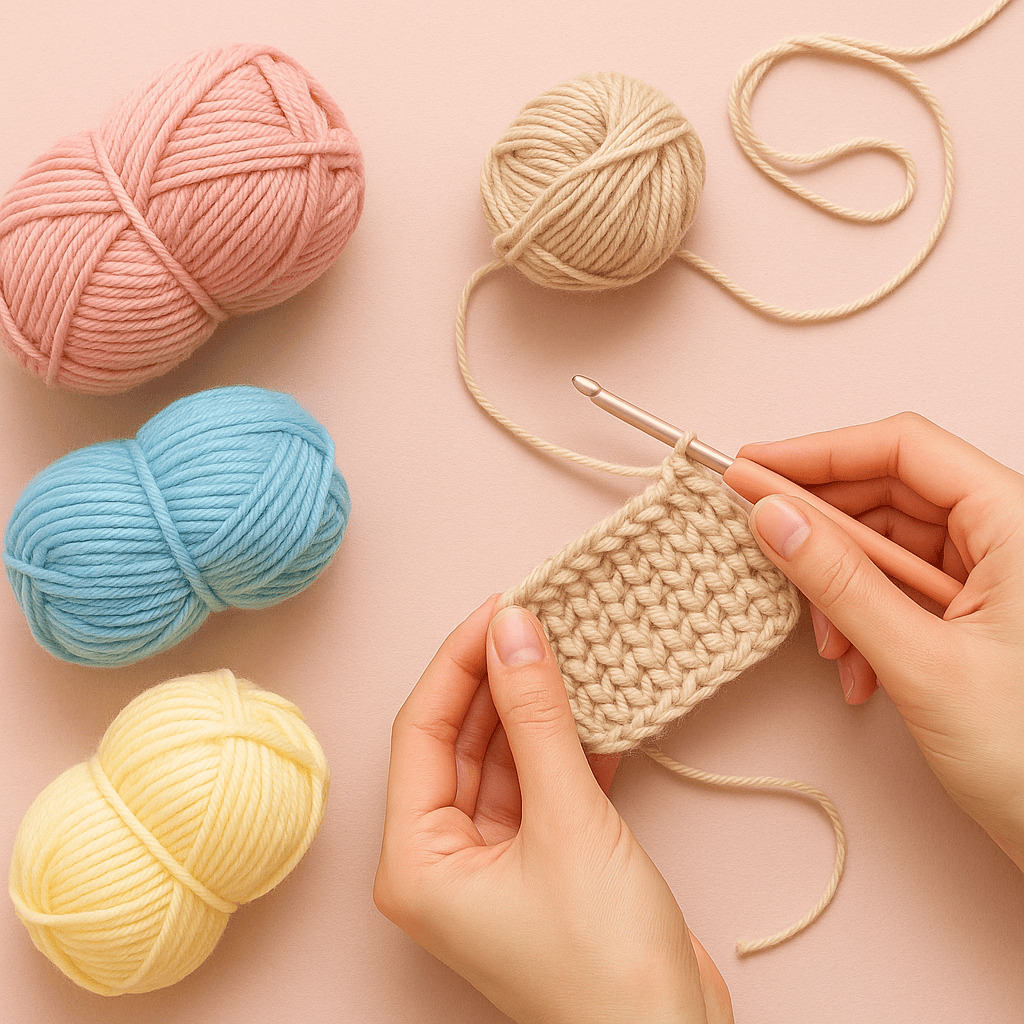
Choosing yarn for your first crochet project can feel more confusing than expected.
There are so many textures, fibers and sizes that it’s normal to be unsure at first.
The good news is that you only need a few simple guidelines to make the right choice.
This guide explains what to look for, which yarns to avoid, and how to make learning much easier.
1. Start with a medium-weight yarn
To clearly see your stitches and practice comfortably, choose a yarn that is:
- medium weight (category 4 – worsted)
- not too thin and not too thick
This balance makes learning a lot smoother.
👉 When in doubt: pick the “middle weight” option.
2. Choose light or pastel colors
Dark shades make stitches harder to see, even for experienced crafters.
Recommended beginner colors:
- beige
- light pink
- baby blue
- soft yellow
Any light color will help you learn faster.
3. Recommended fibers for beginners
The easiest materials to work with are:
✔ Soft acrylic
Affordable, durable and easy to control.
Other great options:
- combed cotton
- acrylic + cotton blends
👉 Avoid these when starting:
- fuzzy yarn (like mohair)
- very thin yarn
- super bulky yarn
- slippery synthetic fibers
They can make learning harder and less enjoyable.
4. Check the label (it actually helps)
The yarn label tells you:
- yarn weight
- recommended hook size
- fiber content
- yardage and grams
As a general rule:
If the label suggests a 4 mm to 5.5 mm hook, it’s perfect for practicing.
5. How much yarn should you buy?
For practice swatches, one 100 g ball is more than enough.
Small projects like coasters or dishcloths also use very little.
Amigurumi usually require less yarn per color, but more variety.
6. Practical tips for choosing yarn without mistakes
- Touch the yarn: if it feels scratchy, skip it.
- Avoid “fancy” yarns until you have more experience.
- Look for consistent thickness (even strand, no bumps).
- If buying online, filter by beginner yarn or medium weight.
Conclusion
The right yarn can completely change your learning experience.
With a comfortable hook and a beginner-friendly yarn, you’ll progress much faster and enjoy the process a lot more.
If you want to keep exploring, here are some useful articles:
👉 What Is Crochet and What Do You Need to Start?
👉 Crochet vs Knitting: What’s the Difference?